
Executive Summary
Across the Pacific Northwest, marine operations depend on uptime. Vessels arrive on tight and often unpredictable schedules, and fueling is frequently one of the final dependencies before a departure window closes. When fueling is delayed or mishandled, the impact extends far beyond a single vessel. Missed tides, crew downtime, dock congestion, environmental exposure, and customer penalties can ripple across an entire operation.
Marine fueling, particularly over the water, is not a commodity service. It is a specialized, regulated activity where reliability, responsiveness, and safety discipline are inseparable. In sensitive waterways, the standard is uncompromising.
The following white paper explores what reliable marine fueling actually requires in practice, why it has become a strategic operational concern for marine operators, and how Tyree Oil supports uptime for working fleets and industrial docks across the Pacific Northwest.
Why Fueling Is Strategic, Not Routine
Marine transport remains the backbone of global commerce. According to the United Nations Conference on Trade and Development (UNCTAD), more than 80% of global trade is carried by sea (1), making vessel uptime a critical concern not just for operators, but for entire supply chains.
In the Pacific Northwest, that global reality meets local complexity. Marine operators must balance:
● Unpredictable vessel arrivals driven by tides, weather, and cargo readiness
● Tight turnaround windows at busy ports and industrial docks
● Strict environmental expectations in sensitive waterways
● Formalized fueling and transfer requirements
Fueling sits at the intersection of all four. As Justin Moore, Purchasing Manager at Fred Wall Marine Construction, explained, “There are times that we have boats that need to leave immediately, and Tyree has come through for us when they need fuel and oil.”
The Marine Fueling Challenge
Fueling is not a commodity when schedules and waterways are at stake. Operators consistently describe three realities that shape their fueling decisions:
1. Time Pressure: Vessels do not always arrive on predictable schedules. Delays at the fueling stage can quickly become missed departure windows.
2. Operational Complexity: Fueling over water and delivering marine-specific lubricants require experience beyond standard fuel delivery.
3. Risk Exposure: Marine fuel transfers are governed by strict regulatory frameworks requiring documented procedures, inspections, and spill-prevention measures under U.S. Coast Guard regulations (33 CFR Part 156 2). Non-compliance or preventable incidents can halt operations and trigger significant consequences.
What Reliable Marine Fueling Actually Requires
Over-the-Water Fueling Is a Different Category of Work
Fueling vessels over water is fundamentally different from land-based fueling. It requires trained personnel, specialized equipment, and documented processes aligned with regulatory requirements. Operators emphasize that not all fuel suppliers are capable or willing to meet these demands. As Operating Manager at GMA Garnet, Hugo Hernandez, explains, “I’ve had other people come out, take one look, and they just can’t do it.” U.S. Coast Guard regulations outline expectations for marine transfer operations, including defined roles, pre-transfer inspections, and spill response readiness (3).
Environmental Risk Is Operational Risk
Environmental exposure in marine fueling is not theoretical. NOAA provides scientific support to more than 150 oil and chemical spill responses annually in U.S. waters. Over more than three decades, NOAA and its co-trustees have helped recover over $10.8 billion for environmental restoration tied to spill incidents (4). These figures underscore the real financial and operational consequences of failures during fuel transfer operations. For marine operators, even minor spills can trigger operational shutdowns, regulatory scrutiny, and reputational damage. That is why experienced operators consistently prioritize prevention over speed. As one marine operations leader noted, “When Tyree is on the dock, we don’t worry about the transfer. They know the protocol, they follow it, and they execute it safely every time.”
Reliability and Responsiveness in Practice
In marine operations, reliability and responsiveness depend on specific operational capabilities:
1. Fast Response Windows: Marine operations rarely operate on a fixed schedule. Tyree’s customers repeatedly cite availability as a critical differentiating factor.
2. Marine-Specific Knowledge: Understanding marine fueling and lubrication requirements reduces errors, prevents delays, and supports long-term equipment performance.
3. Technical Support That Reduces Downtime: Tyree’s technical resources help identify high-performing products that match requirements without increasing costs. The result is extended oil change intervals, delayed overhauls, and meaningful reductions in operating expenses.
Tyree Oil’s Approach to Marine Fueling: Built for Marine Operators in the Pacific Northwest
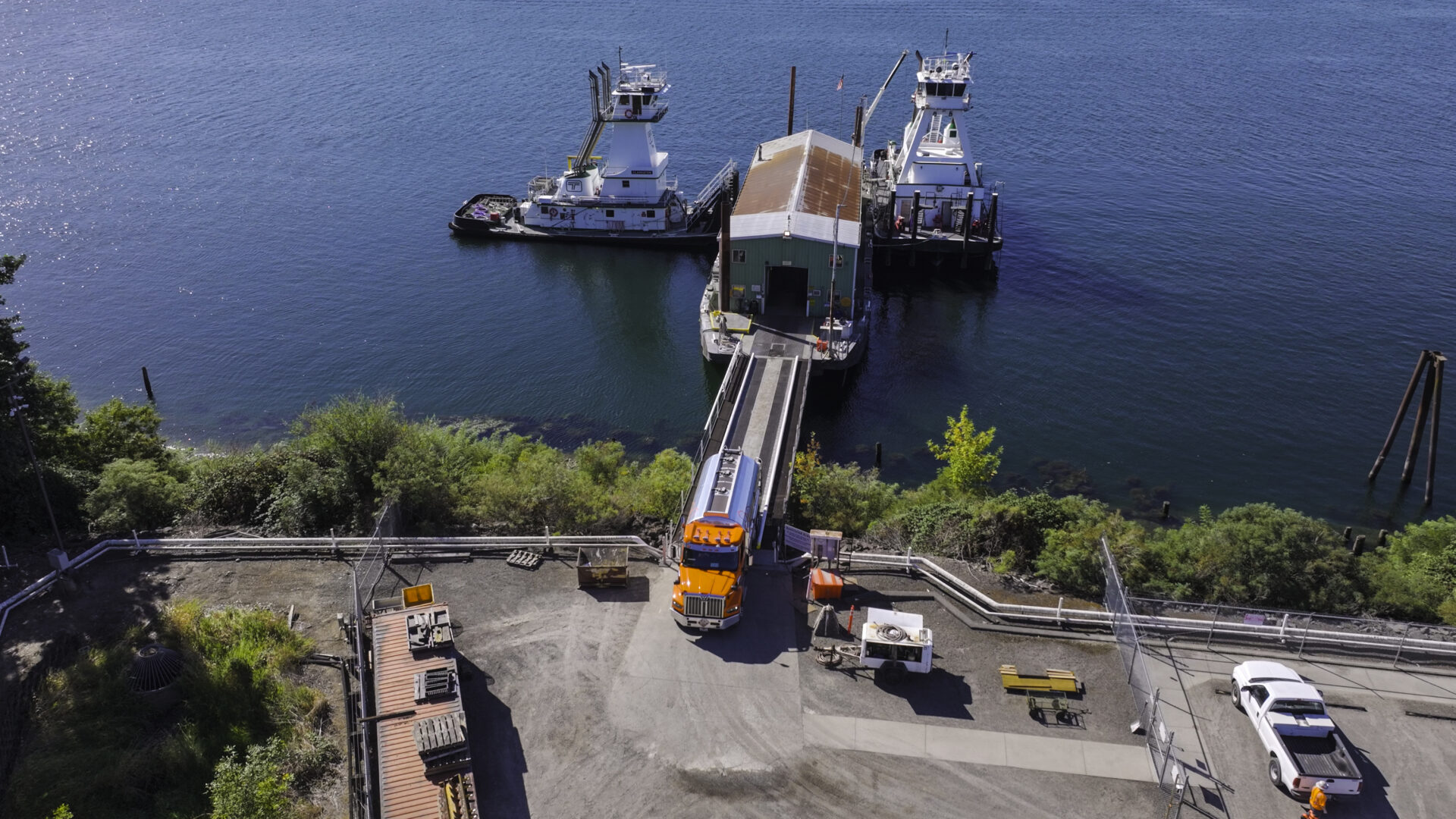
Tyree Oil’s marine fueling capabilities are designed specifically for working vessels, industrial docks, and shipyards — not recreational traffic. The operation reflects an understanding of the region’s waterways, vessel mix, and regulatory environment.
Tyree accommodates vessels in water depths of approximately 30 feet and can support commercial vessels up to 300 feet in length. Capabilities include shore water availability when required, fuel and bulk lubricant delivery, and the ability to pump oil directly onto vessels.
Tyree operates its own company truck fleet, providing greater flexibility and faster response windows than brokered delivery models. All marine personnel and transfer equipment are U.S. Coast Guard certified, reinforcing Tyree’s commitment to regulatory compliance, safety discipline, and operational readiness.
These capabilities allow Tyree to support vessels that many facilities cannot service safely or efficiently.
Case Studies and Practical Takeaways
Case Study: Tidewater Barge Lines
Operating across the Columbia, Snake, and Willamette Rivers, Tidewater Barge Lines faces high costs associated with downtime and maintenance. Over-the-water bulk delivery and lubrication performance were critical concerns. Tyree’s technical resources helped identify a lubricant solution that resolved premature engine failures while supporting extended service intervals. The result was reduced maintenance costs, improved reliability, and greater confidence in long-term equipment performance.
Case Study: Fred Wall Marine Construction
Fred Wall Marine Construction services vessels from Southern California to Alaska, often on short notice. Fueling and lubrication needs vary widely depending on vessel size and project timelines. The ability to fuel over water and source marine-specific products quickly has made Tyree a reliable partner. As Moore notes, responsiveness extends beyond standard requests. Even unusual or one-off requests are addressed without delay.
Case Study: GMA Garnet Dock Operations
At a high-traffic industrial dock, fueling complexity and access constraints limit supplier options. GMA Garnet has repeatedly found that, even when bids are issued, Tyree remains the only supplier capable of executing the work safely and effectively.
Practical Checklist: Selecting a Marine Fueling Partner
● Can they support urgent calls, nights, and weekends?
● Do they demonstrate true over-the-water transfer capability?
● Do they understand marine lubricants and provide technical support?
● Can they coordinate via radio and dock protocols?
● Can they support mixed marine and land-based operations?
● Do they offer fuel options aligned with evolving requirements?
Keep Your Next Departure on Schedule
Fueling should support marine operations, not introduce uncertainty at the final moment. Talk with Tyree Oil today about dock fueling, over-the-water transfers, mobile fueling for shipyards, lubrication programs, and contingency planning. Because on the water, uptime isn’t optional.
Notes
1. https://unctad.org/news/shipping-data-unctad-releases-new-seaborne-trade-statistics
2. https://www.ecfr.gov/current/title-33/part-156
3. Ibid.